gNa+
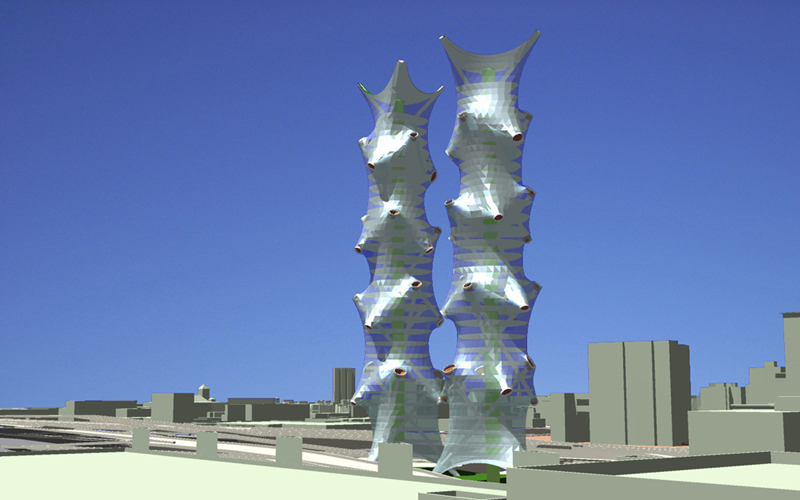
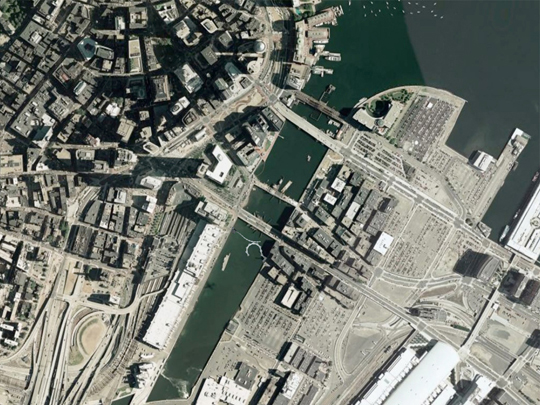
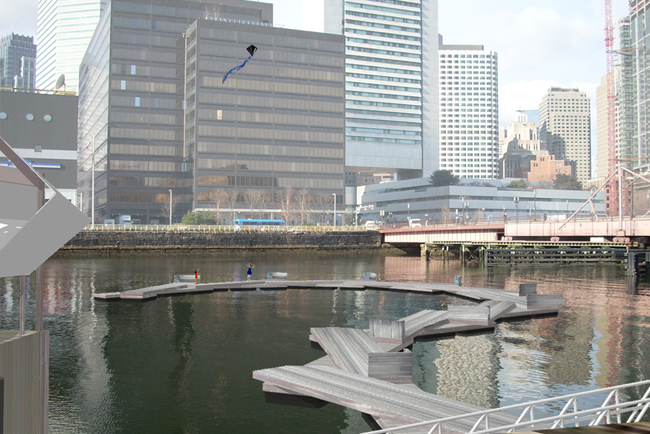
proposes access to the water sheet and a new form of conveyance across Fort Point Channel to the south of Summer Street
as a variation of the Channel's celebrated mechanical bridges.
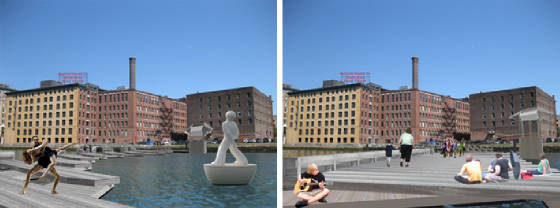
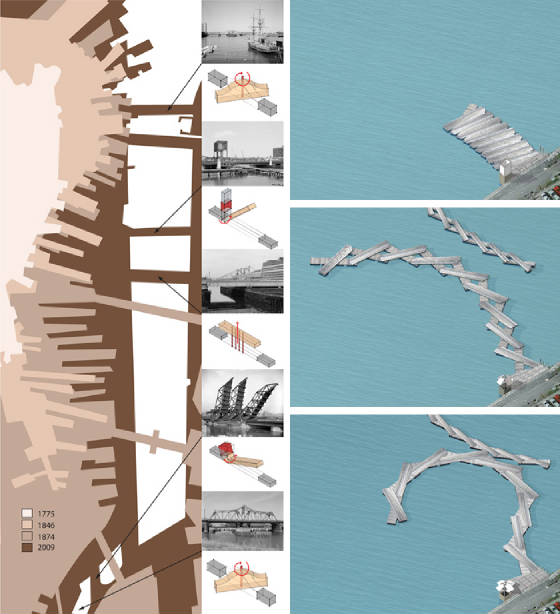 Diagram showing the changing Boston shoreline and movable Channel bridges. Illustrations
of Piers deploying.
Diagram showing the changing Boston shoreline and movable Channel bridges. Illustrations
of Piers deploying.
Our proposal acknowledges the incredible importance of Boston's seafaring past by alluding to both the piers that
bristled from the city's shores, and to the unique bridges that opened and closed as cargo vessels shipped with the tides.
The Fort Point Channel bridges are a national engineering treasure, represent an incredibly diverse and imaginative negotiation
of conveyances on land and water, the mechanisms of turning gears, wheels, and counterweights echoing the Newtonian clockwork
of the solar system, the diurnal rotations of the earth and moon that gives us the cycles of the tides, syncopated with day
and night, work and play. The piers extend out into the water as a celebration of voyage and crossing, the reach of imagination,
a freight of ideas, and the possibility of reconciling technological aspirations with an experience of the natural environment.
 Deployment
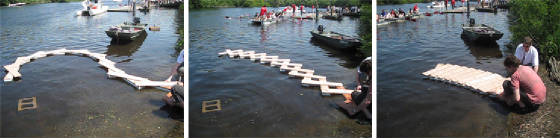
of 1"=1'-0" prototype in the Charles River.
Deployment
of 1"=1'-0" prototype in the Charles River.
Special thanks to Elsiana Zhaka, Beth Baniszewski, Michael Kyes, David
Porter, David Rubino, and James Vayo.